

Paul McNamara

What Ukraine’s evolving drone ecosystem reveals about incentives, trust, engagement, and the operating environments that produce adaptability
The Wall Street Journal recently asked whether emerging technologies are producing an evolution in warfare or a genuine revolution.
Perhaps the answer is both, with important implications for the defense companies expected to keep pace.
Drones, autonomous systems, artificial intelligence, sensors, and precision weapons are evolving quickly. Designs improve. Tactics change. Countermeasures emerge. Technologies that appear decisive today can become outdated within months.
At the same time, many traditional military platforms and capabilities will remain important. That makes it difficult to argue that the old world is simply disappearing and being replaced by an entirely new one.
But the process through which some emerging capabilities are being developed, allocated, improved, and used appears far more revolutionary.
The drones may be evolving. The system being used to evolve and deploy them represents a radical departure from older approaches.
A Revolutionary Process for Continuous Evolution
The Wall Street Journal article describes a Ukrainian procurement system in which battlefield units earn “e-points” based on verified results. Drone footage provides evidence of their effectiveness. The points can then be converted into purchasing power, allowing units to acquire additional systems directly from manufacturers through a classified marketplace.
As relationships develop between military units and manufacturers, the weapon becomes less like a finished product and more like a continuously evolving service. It is repeatedly updated and redesigned to meet changing battlefield conditions.
The article also describes engineers going directly to the front line, sitting with troops, drinking coffee, understanding the problems they face, and working together to solve them. Instead of receiving a detailed order for a predetermined product, engineers and practitioners jointly determine what capability is needed.
The technology is important, but so are the changes surrounding it.
New incentives are being created. Evidence of performance influences access to resources. The distance between designers and practitioners is reduced. Learning from actual use quickly influences the next iteration of the technology.
The result is not just a better drone. It is a greater capacity to keep producing better drones and better results even as conditions change.
That distinction matters far beyond the battlefield.
What This Means for Defense Companies
Defense companies are often encouraged to innovate by investing in new technologies, hiring talented engineers, modernizing systems, and accelerating development programs.
All of that matters.
But technology alone does not create adaptability.
An organization can possess advanced tools while continuing to operate through relationships, incentives, and management practices designed for a more stable environment. It can collect more data while decisions remain slow. It can automate individual activities while work remains fragmented across programs, functions, laboratories, suppliers, and capabilities.
The decisive advantage may not come from creating one breakthrough technology.
It may come from creating an organization capable of repeatedly connecting the right people, learning from execution, moving resources toward changing priorities, and improving capabilities faster than conditions change.
That requires more than incremental improvement to existing processes. It requires a different philosophy of how complex work should be organized.
New Outcomes Often Require New Incentives
The e-points example is revealing because it recognizes that behavior is shaped by more than instructions.
Leaders can ask people to collaborate, share resources, and act for the good of the larger enterprise. But when the operating environment rewards local protection, people will often protect what they control.
We see this frequently in the management of test equipment.
Equipment hoarding is often described as a cultural or behavioral problem. Yet hoarding may be a rational response to uncertainty.
People hold onto equipment because they do not trust that it will be available when they need it. They may not know where other equipment is located, whether it is calibrated, whether another program will return it, or whether their future request will receive the necessary priority.
Simply telling people to share does not eliminate those concerns.
At Sente, we help customers change the conditions that make hoarding appear necessary.
We connect people with shared visibility into equipment capabilities, needs, priorities, locations, and commitments. We help them establish practices for requesting resources, coordinating work, resolving conflicts, and responding when circumstances change.
As people repeatedly receive the equipment they need, when they need it, their relationship to the system changes. They become more confident that releasing a resource today will not leave them unable to fulfill their commitments tomorrow.
Sharing becomes safer. Collaboration becomes more rational. Relationships that were once shaped by competition for scarce resources can become relationships organized around shared outcomes.
Sente does not merely ask people to behave differently. We help change the conditions and incentives that made the old behavior rational.
This new operating environment does more than encourage sharing. It helps produce genuine Engagement. People become more willing to disclose their needs, release resources, consider other perspectives, and make commitments across organizational boundaries because they have greater confidence that the system and their colleagues will support their ability to succeed.
Relevant Connection
The article’s description of engineers working directly with battlefield practitioners also resonates strongly with our approach.
The important point is not simply that developers gather user feedback. Most technology companies make that claim.
The deeper shift occurs when the separation between the people building a capability and the people using it becomes more permeable.
Designers and developers remain close enough to the work to understand what practitioners are trying to accomplish, where current tools and practices are failing, how conditions are changing, and what improvements would create meaningful value.
This is how we have developed Sente’s technology and practices.
We built our solutions through sustained engagement with the people who perform and coordinate tests, manage equipment, operate laboratories, support engineering programs, and respond when plans change.
We describe our software as built by practitioners, for practitioners.
That does not mean practitioners merely supplied a list of requirements. It means practitioners’ knowledge has continuously shaped both the software and the practices the software enables.
Relevant Connection brings users and developers into more direct relationships because it is practically useful/relevant. It also connects people to the resources, information, practices, and intentions needed to accomplish the work.
But Relevant Connection alone is not enough.
Committed Engagement
Relevant Connection creates the possibility of collaboration, but it does not guarantee it. People must have reasons to engage and an operating environment in which doing so is safe, productive, and more likely to help them succeed.
At Sente, we don’t simply request committed engagement from people. We help produce it by creating shared visibility, establishing new incentives, and introducing practices that enable people to surface concerns, influence one another’s thinking, make commitments, and act together toward shared outcomes.
Committed Engagement means more than participation. When people genuinely engage, they are willing to let facts and others’ perspectives shape how they think and act. They disclose what is at risk, confront conflicts, reconsider assumptions, make and fulfill commitments, learn from execution, and adapt as situations change.
In Sente’s solutions, Committed Engagement is enabled through practices such as regular coordination sessions, Test Readiness Reviews, Post Test Reviews, equipment or service requests, location audits, and the reuse of knowledge captured from prior work.
These practices allow people to understand not only what is scheduled, but what is at risk, what obligations must be fulfilled, what resources are needed, and what opportunities exist to act differently.
Visibility becomes valuable when the operating environment enables people to act on it together.
Relevant Connection and Committed Engagement make Orchestration possible. People can coordinate their commitments and bring internal and external resources together around the intentions and outcomes that matter.
The objective is not to make people busier or add more processes. It is to create the operating environment, visibility, relationships, incentives, and practices needed for people to act together effectively in a complex environment.
Competitive Outcomes
Relevant Connection and Committed Engagement must ultimately produce results.
Those Outcomes may include greater speed, improved availability, better use of internal and external resources, reduced cost, greater resilience, and a stronger ability to respond when priorities change.
Competitive Outcomes also provide evidence that the new way of working is credible.
Trust is not created by asking people to trust the system or one another. It is created through repeated experiences in which commitments are fulfilled, resources arrive when promised, conflicts are addressed openly, and collaboration produces better results than isolated action.
This creates a reinforcing cycle.
A different operating environment creates new incentives and makes genuine Engagement safer and more productive.
Relevant Connection gives people greater visibility into one another’s needs, resources, and commitments.
Committed Engagement turns that visibility into new thinking, coordinated commitments, and collective action.
Together, Connection and Engagement enable the organization to orchestrate people, knowledge, equipment, services, and other resources around shared intentions.
That orchestration produces meaningful Outcomes.
Those Competitive Outcomes build trust, which is the foundation for superior performance.
Trust makes people more willing to share information, release resources, surface problems, consider others’ perspectives, and collaborate across organizational boundaries.
That greater willingness deepens Engagement, strengthens Connection, and produces better Outcomes.
Relevant Connection, Committed Engagement, and Competitive Outcomes are not three separate features of our solutions. They form a virtuous cycle that creates and strengthens trust, orchestration, and adaptability.
Adaptability Is a Human and Organizational Capability
The Wall Street Journal article suggests that, against an adaptive adversary, the rate of learning and speed of iteration may matter more than any individual technology. It also shows how difficult this can be for governments, militaries, and traditional defense organizations whose procurement and operating models were built for longer and more predictable cycles.
The lesson is not that every defense company should reproduce Ukraine’s wartime procurement system.
The lesson is that adaptability must be intentionally designed into the relationships, incentives, practices, and systems through which work is performed.
Defense companies should be asking:
Do our incentives encourage enterprise outcomes or local protection?
Can the people developing capabilities learn directly from the people using them?
Does evidence from execution influence current decisions, or only future reports?
Can scarce equipment, expertise, and capacity move toward changing priorities?
Do people trust the operating system enough to share resources rather than protect them?
Are our digital investments developing human capability, or only automating existing tasks?
These questions reach beyond product development. They concern how the entire enterprise learns and operates.
Evolution or Revolution?
So, is the new way of war evolutionary or revolutionary?
The technologies may be evolving, even if they are doing so at extraordinary speed.
But the organizations gaining advantage appear to be revolutionizing the process of evolution itself.
They are shortening the distance between use and learning. They are connecting practitioners and developers. They are grounding trust in evidence. They are creating incentives that direct resources toward demonstrated outcomes. They are replacing finished products and fixed processes with continuously developing capabilities.
That may be the most important implication for defense companies.
They will not become adaptable simply by adding new technologies to old relationships, incentives, and operating philosophies.
At Sente, we have spent decades helping organizations create the operating environments, Connection, Engagement, practices, and evidence-based trust required to orchestrate resources and produce significant Outcomes in complex environments.
What once may have appeared unconventional increasingly looks essential.
A new way of war requires a new way of operating.
Request a Demo
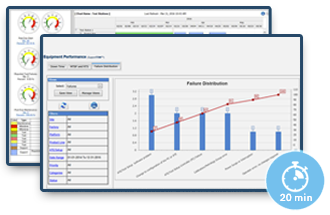
See how Scireo TRM Software drops asset and support costs by 50% while accelerating time-to-market 2X.
Relevant Content
Software Aimed at Outcomes:
Designed for Practitioners, by Practitioners
In the Beginning Our Test Resource Management and Lab Management software has always been aimed at producing important outcomes for our customers because it was designed by our practitioners who were personally responsible for delivering those outcomes. Everyone in our company was focused on delivering results that far exceeded our costs so that our customers…
Why Philosophy Has Always Been Sente’s Competitive Advantage
A recent Forbes article, “Software Ate The World, AI Ate Software And Now Philosophy Is Eating AI,” argues that philosophy is becoming central to AI strategy. That caught our attention because, at Sente, philosophy has never been separate from operational performance. Long before AI entered the conversation, our competitive advantage came from a simple but…
Case Study: Turning Test Experience Into Faster Execution
How CoordinateTRM helped an aerospace test organization improve coordination, reuse operational knowledge, and increase test speed by 50 to 75 percent The Challenge The customer’s test organization supports multiple programs competing for specialized facilities, equipment, engineering support, and other constrained resources. Success requires close coordination among the lab, its program customers, project engineering, managers, and…
Case Study, Utilization, Cost, and Speed: Space Company Leverages Assets
The hoarding culture was slowing this company down while impacting cost and quality. See how a journey to common processes and collaboration lead to a 50% reduction in assets as their business doubled.
Notable Quotes
“Sente’s proprietary Test Resource Management™ solution delivers an integrated and holistic approach for test resource management with unique capabilities that allow large organizations in the aerospace and defense, semiconductors, and life sciences industries to manage and streamline the complexity of their test operations. Frost and Sullivan Analyst.