


Paul McNamara

Why Test Resource Management and Lab Management, enabled by Scireo software, are Force Multipliers in Engineering
For years, engineering organizations have been told that to get more speed, or increase capacity, they need more: more equipment, more people, more space, more budget. That growth in a business always requires growth of capital structures.
But the truth is different—sometimes uncomfortably different.
Most companies don’t need more.
They need to get more from what they already have.
This is precisely where Test Resource Management (TRM) and Lab Management by Sente show up—not as software systems, but as force multipliers for the entire engineering and test enterprise.
They transform how people work, how labs operate, and how capital structures produce value. They enable companies to consistently meet commitments, accelerate product schedules, reduce capital spending, and build resilience across programs and functions.
Let’s break down why.
The Human Capital Multiplier:
From Heroics to Coordinated, Autonomous Teams
In most engineering organizations, speed is lost not because people lack talent, but because they lack:
- shared situational awareness
- clear and shared priorities
- trusted mechanisms for cross-boundary collaboration
- mechanisms for learning and improvement that really work
Without these, teams operate like disconnected islands. Managers act as gatekeepers instead of integrators. Narratives diverge. Firefighting becomes the culture.
TRM and Lab Management directly address this by:
- giving every engineer and technician a shared operational picture
- coordinating priorities across programs
- revealing constraints early so that contingencies can be planned
- enabling “One Lab” behavior across organizational lines
- making it safe—and rewarding—to share resources and ideas
This turns human capital from a collection of individuals into a coherent, intention-driven team capable of speed and creativity.
That is a force multiplier.
The Capital Equipment Multiplier:
Increase the capacity of your capital equipment by 2 to 4X with dramatic increases to utilization and availability.
Capital equipment—chambers, antennas, racks, power supplies, analyzers, benches—is expensive. Yet most labs only use their equipment at a fraction of its true capacity.
Not because people are lazy.
Because the system is fragmented and untrustworthy, it produces incentives to hoard equipment.
Engineers don’t know what’s available.
Schedulers lack visibility across boundaries.
Assets sit idle while programs continue to wait.
“Midnight acquisitions” create chaos and distrust.
Delays cascade into costly schedule slips.
TRM and Lab Management reverse this by increasing the trustworthiness of the system:
- measuring and driving utilization
- improving availability through visibility and accountability
- coordinating usage across the enterprise in a “one company” approach
- eliminating the need to “borrow” through process & incentives
- automating availability and readiness signals
Suddenly, the same equipment fleet produces 2–4× the throughput.
A company doesn’t need to buy more equipment—it needs to use what it already owns.
That is a force multiplier.
The Capital Inventory Multiplier:
Turning Know-How Into Repeatable, Scalable Practices
Engineering organizations rely heavily on tacit knowledge—tribal know-how that quietly powers the operation yet rarely scales.
TRM and Lab Management capture and standardize this knowledge in ways that:
- accelerate onboarding
- promote consistent execution
- strengthen cross-boundary collaboration
- reduce variability in outcomes
- produce AI-ready data streams for future automation
Practices become portable.
Capabilities become scalable.
Capabilities become part of the company’s identity.
This is how “One Company” initiatives become more than a slogan—they become an operational reality.
That is a force multiplier.
The Operating Capital Multiplier:
Lower Surprises, Costs, and Friction
When labs operate more intentionally:
- overtime drops
- expediting costs shrink
- firefighting disappears
- schedules stabilize
- customer satisfaction rises
- effort shifts from recovery → progress
The same budget now produces far more output.
This is the practical side of Sente’s “speed algorithm”:
Clarify intentions, stay situationally aware, adjust actions, and learn from outcomes. In the process, build a repertoire of intentions available in different situations. Become fluent with them. Acclerate time-to-market.
TRM and Lab Management operationalize this in everyday work, dropping operating capital requirement dramatically.
That is a force multiplier.
The Financial Capital Multiplier:
Better Margins, Faster Revenue, Lower CapEx**
The financial impacts stack fast:
- delaying or avoiding capital purchases
- recovering lost schedule time
- capturing revenue earlier through faster launches
- reducing total cost of Time, Energy, Money, & Lost Opportunity
- improving margins through better utilization of people and assets
Many customers experience more than a 10× return on TRM and Lab Management.
Not by spending more, but by orchestrating what they already have.
That is a force multiplier.
The Meta-Multiplier:
TRM + Lab Management Improves Every Capital Structure at Once**
Most improvement initiatives focus on one dimension:
- a tool for equipment
- a workflow for people
- a process for scheduling
- a system for reporting
TRM and Lab Management are different.
They improve all five capital structures simultaneously:
- Human capital → higher commitment, better collaboration
- Capital equipment → higher utilization, fewer purchases
- Capital inventory → stronger, scalable practices
- Operating capital → lower costs, smoother flow
- Financial capital → better margins, more competitive speed
That’s why the effect feels exponential.
You don’t just get faster schedules.Or reduced costs.
Or improved utilization. Or Happy Employees.
You get all of it at the same time, reinforcing itself in a positive loop of speed, capability, competitiveness, and engagement.
That is the ultimate force multiplier.
Closing Thought:
Internal Labs Don’t always Need More—They Need More From What They Have
Test organizations often get blamed for delays, cost overruns, or schedule slips.
But the root cause is rarely the people or the equipment.
It’s the lack of a force multiplier.
TRM and Lab Management by Sente provide that multiplier.
They help engineering organizations become more:
- aligned
- autonomous
- resilient
- predictable
- strategically competitive
And they do it while reducing the cost of producing those outcomes.
Companies that adopt TRM and Lab Management don’t just improve operations—they transform them.
Request a Demo
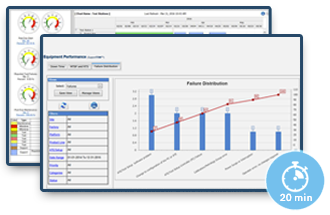
See how Scireo TRM Software drops asset and support costs by 50% while accelerating time-to-market 2X.
Relevant Content

Essential Complexity Today. Effortless Capability Tomorrow.
Lessons We’ve Learned About the Essential Complexity Required to Deliver the Breakthrough Results We’re Known For Over the past two decades, our work with test organizations has taught us something important: Breakthrough results rarely come from simplicity. They come from mastering the essential complexity that actually governs performance — and minimizing the accidental complexity that…
Accelerated Enterprise Asset Management: Accelerating Engagement, Speed, & Efficiency
Accelerated Enterprise Asset Management (TRM) is an asset management approach pioneered by Sente and focused on complex and costly, asset-intensive environments that support mission-critical enterprise processes. This includes engineering design and development, manufacturing, and service organizations like MRO or calibration. In environments where costs can be compounded by several factors – utilization, poor availability, acquisition…