

Paul McNamara

Many companies are beginning to recognize a problem that has been building for years.
Their enterprise systems are powerful, but they are not always purposeful. They can manage transactions, store records, enforce workflows, and document what happened. But they often do not help people understand the intention behind the work, the situation that is changing, or the next action most likely to produce the desired outcome.
That distinction matters.
A process-driven system asks, “Was the step completed?”
A purpose-driven system asks, “Are we still on track to produce the outcome that matters?”
At Sente, we would say this slightly differently: a truly purpose-driven system must also become intention-driven.
Purpose describes the larger reason something matters. Intention translates that purpose into action. Intention connects the ultimate outcome to strategic priorities, tactical work, current situations, commitments people make, and the learning required when results fall short.
That is the philosophy behind Scireo solutions.
From Process to Purpose
In complex test environments, it is easy for management systems to become centered on things.
Equipment. Work orders. Calendars. Requests. Calibration records. Utilization reports. Test events. Status updates.
All of these matter. But none of them matter by themselves.
A test asset only matters because it helps produce valid engineering knowledge. A lab schedule only matters because it helps programs move faster. A calibration status only matters because it protects readiness, compliance, and confidence in test results. A delay log only matters if it helps the organization learn and prevent the same breakdown from recurring.
The real concern is not whether the system contains data.
The real concern is whether the system helps people produce the intended outcome.
This is where many enterprise systems struggle. They are often built to manage standard processes, not changing situations. They can be robust, but not always resilient. They can enforce a workflow, but they do not always help people adapt when the workflow is no longer enough.
In complex test operations, the situation is always changing. Equipment becomes unavailable. Schedules move. Calibration windows close. Facilities become constrained. Priorities shift. New threats, opportunities, and obligations appear every day.
In that environment, speed does not come from following a fixed process more rigidly.
Speed comes from helping people see the situation clearly, understand the intention, choose the best next action, and learn quickly when the outcome is not what they expected.
Scireo and Intention-Driven Execution
Long before “purpose-driven systems” became a phrase in the market, Sente was building Scireo solutions around a fundamental belief: work improves when people are clear about the intentions they are trying to fulfill.
Today, that intentionality does not live in the software alone. It lives in the combination of Scireo, our playbooks, our implementation practices, our management routines, and the way people use the system to coordinate work, keep commitments, learn from breakdowns, and improve outcomes.
That distinction matters.
We are not claiming that Scireo, by itself, is already a fully autonomous intention-driven system. We are saying something more grounded and, we believe, more important: Scireo has always been designed and implemented from an intention-driven philosophy.
In our world, intentions exist at multiple levels.
There are tactical intentions: complete the test, prepare the asset, resolve the downtime, and keep the commitment.
There are strategic intentions: improve throughput, reduce delays, increase availability, reduce unnecessary expense, and build cross-functional trust and accountability.
And there are ultimate intentions: to help people and the companies they work for succeed, to help customers get products to market faster, and to help organizations produce more value from the test resources they already own.
Scireo solutions matter because they help connect these levels.
They do not treat a lab event as merely an entry on a calendar. They treat it as a commitment to produce a result. They do not treat a piece of equipment as merely inventory. They treat it as a resource whose value is fulfilled when it contributes to an engineering or business outcome. They do not treat a delay as merely a note. They treat it as a breakdown that can become future knowledge.
This is the difference between a system of record and a system of intention.
A system of record tells you what happened.
A system of intention helps you understand what you are trying to accomplish, what is happening now, what is getting in the way, what action to take, and what to learn.
Scireo solutions are moving us in that direction.
Why This Matters for Agentic AI
This history gives Sente an important advantage as Agentic AI becomes more practical.
Many organizations will apply AI to broken or shallow workflows and get limited results. They may automate tasks, summarize reports, or recommend actions. That kind of efficiency is valuable. It can reduce effort, save time, and make existing work easier.
But efficiency is not the same as transformation.
Efficiency improves the current way of working. Transformation changes what the organization is capable of producing. It improves how people see situations, coordinate commitments, respond to change, learn from breakdowns, and produce better outcomes over time.
Agentic AI becomes far more powerful when it operates inside an intention-driven architecture.
An agent needs to know more than the next task. It needs to understand the desired outcome, the current situation, the available resources, the existing commitments, the emerging risks, and the tradeoffs that matter.
In other words, Agentic AI needs the same thing people need: clarity of intention.
This is why Scireo’s history matters.
For years, we have been building systems and practices that capture the essential complexity of test operations: requests, commitments, readiness, constraints, downtime, utilization, resource availability, post-test learning, and cross-functional coordination. That structure gives AI something meaningful to work with.
Today, Scireo becomes intention-driven through the combination of software, playbooks, management practices, and the disciplined way our customers use it. In the future, Agentic AI will allow more of that intentionality to be built directly into the software experience.
In a lab environment, that could mean agents that identify readiness risks, recognize calibration exposure from schedule changes, suggest alternatives when resources are constrained, summarize delay patterns, and turn post-test reviews into reusable organizational knowledge.
But none of that starts with AI.
It starts with the philosophy of the system.
If the system is intention-driven, AI can help people fulfill the intention.
That is the real opportunity.
Purpose Requires Intention
Purpose-driven systems are a necessary and important evolution. They move companies away from managing activity for its own sake and toward managing the outcomes that truly matter.
But purpose alone can remain too abstract.
To become operational, purpose must be translated into intention. Intention must be connected to situations. Situations must be connected to action. Actions must be measured against outcomes. Outcomes must produce learning. And learning must improve the next cycle of action.
That is what Sente has been working on from the beginning.
We did not start with the language of purpose-driven systems. We started with the practical problem of helping complex organizations produce better outcomes from their test resources: labs, equipment, people, and their commitments.
Over time, that work taught us something important:
The companies that move fastest are not the ones with the most data, the most assets, or the most rigid processes.
They are the ones who can see clearly, act intentionally, coordinate effectively, and learn faster.
That is what it means to be intention-driven.
And that is why Scireo solutions are well-positioned for the next era of purpose-driven, AI-enabled operational systems.
Request a Demo
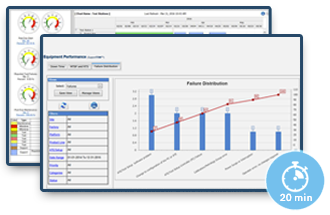
See how Scireo TRM Software drops asset and support costs by 50% while accelerating time-to-market 2X.
Relevant Content
Essential Complexity Today. Effortless Capability Tomorrow.
Lessons We’ve Learned About the Essential Complexity Required to Deliver the Breakthrough Results We’re Known For Over the past two decades, our work with test organizations has taught us something important: Breakthrough results rarely come from simplicity. They come from mastering the essential complexity that actually governs performance — and minimizing the accidental complexity that…
Enterprise Transformation Requires Transformation of Capital Structures
Industrial revolutions are triggered by the introduction of new tools. Companies that learn how to exploit these tools with a comprehensive capital structure strategy win. Those who do it first dominate. New tools create possibilities. Competitive advantage comes from developing the capital structures and capabilities required to exploit them. Companies that are engaged in “transformation” efforts…