

Paul McNamara

Most organizations are more task-driven than they realize
People do the next step because the procedure says to do it. They complete the form, move the request, perform the check, close the ticket, update the calendar, or follow the workflow because that is what the process requires. Sometimes that is enough. But often it is not.
The problem is not that tasks are unimportant. The problem is that tasks, by themselves, do not tell people how the work they are doing helps or hinders the next practice in the sequence, the larger outcome they are trying to produce, or the ultimate reason the work matters at all.
That distinction matters.
A task-driven organization can be very busy without being very effective. People complete steps, but the larger purpose is often weak or lost. It may exist in a plan somewhere, but if it is not alive in the moment, it cannot guide judgment, adaptation, or learning. Activity continues, but the work becomes disconnected from the outcome it is supposed to produce.
Intention gives action meaning
This is where intention becomes important.
An intention is a committed outcome someone is trying to fulfill. It may be tactical, such as identifying potential risks to a test program based on data in Scireo, ensuring readiness with the same data, or resolving downtime using new tactics. It may be strategic, such as improving throughput, reducing delays, increasing availability, or strengthening accountability across functions. And it may be ultimate, such as helping a company move faster, become more competitive, or create more value from its existing resources.
An intention is more than a task and more specific than a vague objective. It gives action meaning, priority, and direction.
That is what we mean by intention-driven.
Task-driven work focuses on completing assigned steps. Intention-driven work focuses on producing the outcome that matters. Task-driven people ask, “What do I do next?” Intention-driven people ask, “What is needed now to fulfill the commitment?”
That difference may sound small, but it changes everything.
Intention changes how people operate
When people are working from intention, they are not merely executing a sequence. They are relating the sequence to a situation. They are judging whether the next step still makes sense, whether a different action is needed, whether a risk is emerging, whether an opportunity has opened, or whether the current path should be changed altogether.
That is why intention-driven work operates differently.
It begins by clarifying the intention. What are we trying to accomplish? What commitment are we trying to fulfill? What result actually matters here?
Then it requires people to assess the current situation. What is happening now? What has changed? What do we know? What do we not yet understand?
From there, people working intentionally identify threats, obligations, and opportunities. What could prevent success? What must be fulfilled? What openings are available to accelerate progress, reduce cost, or improve the outcome?
Then comes judgment. What is the best action now? Not just the next step in the inherited sequence, but the best action for fulfilling the intention in the current situation.
Then comes measurement. Did the action produce the intended result?
And if it did not, then learning is required. People develop new repertoires of intentions and skills, along with better criteria and standards for judging situations and choosing actions.
This is one reason intention-driven work matters so much operationally.
It improves decision quality under changing conditions. It helps teams adapt rather than freeze or merely comply. It supports better requests, better coordination, and better learning. And it reduces the gap between process execution and actual fulfillment.
Sometimes speed comes from seeing a different path
Think of a driver who encounters a sign that says, “Road closed.” A person who knows the area and understands the destination does not simply stop and wait. They begin looking for alternatives. They interpret the situation in light of the intention. They look for another route. They may even find a better one.
But someone without enough background knowledge often does not know what to do other than guess or wait for direction.
The same thing happens in organizations. When people are task-oriented, they often stop when the path breaks down because they do not have the situational understanding, the repertoire of alternatives, or the confidence to act intelligently. Intention-driven work requires more than compliance. It requires the background knowledge needed to assess the situation and respond well.
This is also why intention-driven work can produce major gains in speed.
Some gains come from the obvious place. People avoid delays or accelerate actions because they are situationally aware and act appropriately. But some of the greatest gains come from something deeper. When people think from intention rather than task, they can sometimes see that the current path is not the only path. Entire sets of steps may be unnecessary. A different sequence may fulfill the commitment faster. Fewer, better-aligned intentions may produce the outcome more effectively than a long chain of inherited activity.
Those possibilities are much harder to see in a task orientation.
Intention changes culture too
Intention-driven work matters culturally as well.
It develops stronger ownership. It reduces passive task orientation. It helps people understand why coordination matters. It creates a basis for accountability that is smarter than box-checking, because it asks whether the commitment was fulfilled, not merely whether the procedure was followed. It also produces engagement and greater satisfaction in the work. People can see how they are making a difference rather than performing disconnected tasks.
In our case, this idea is even reflected in our name. The Sente Group takes its name from an ancient board game term that means to have the initiative. Initiative is impossible in task orientation. It depends on being able to see the situation, understand the intention, and act accordingly.
The same is true of Scireo. The name contains the Latin root scire, meaning “to know.” Knowledge matters because success depends on more than activity. People need to understand the intentions they are trying to fulfill, the situations they are operating in, and the tactics and strategies available to them. Scireo helps make the situation more visible so people can act with greater clarity.
That is one reason Scireo is built to support intention-driven operations. It connects resources, commitments, readiness, service, and action. It helps teams act on what they are trying to accomplish, not just what they are assigned to track. It also supports innovation because people using Scireo develop the background knowledge needed to see new possibilities.
AI becomes more useful when intention is clear
People may also ask where AI fits into this.
We believe AI becomes far more useful when it operates inside an intention-driven way of working. If people are clear about the outcome they are trying to fulfill, the current situation, the commitments involved, and the resources available, AI can help surface risks, suggest actions, and support coordination. But AI does not replace the need for intention. It depends on it.
Process should serve fulfillment
This does not mean process is unimportant.
Intention-driven does not mean ignoring process. It means using process in service of fulfillment. Process is valuable when it supports the intention. But when a process becomes a constraint that no longer serves the purpose or the commitment, people need the capacity to recognize that and respond intelligently with different actions.
That is the shift we are talking about.
The shift is from managing tasks to fulfilling commitments.
And that shift is essential for organizations that want to move faster, adapt better, and produce more value from the people, assets, and opportunities they already have.
Request a Demo
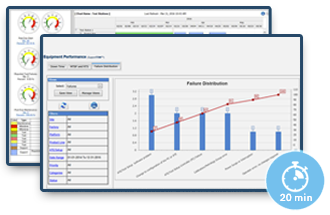
See how Scireo TRM Software drops asset and support costs by 50% while accelerating time-to-market 2X.
Relevant Content
Purpose-Driven Systems Need Intention-Driven Execution
Many companies are beginning to recognize a problem that has been building for years. Their enterprise systems are powerful, but they are not always purposeful. They can manage transactions, store records, enforce workflows, and document what happened. But they often do not help people understand the intention behind the work, the situation that is changing,…
Why Orchestration Matters
Most management systems are built to support planning, tracking, workflow, and reporting. Those functions matter. They help organizations define work, assign responsibility, and monitor progress. But they do not, by themselves, fulfill commitments. That becomes especially clear in dynamic, capital-intensive operations. Conditions change. Constraints appear. Risks surface late. Priorities shift. Equipment becomes unavailable. Service issues…